

Teachers guide learning in a Montessori toddler program in Livermore by using hands-on tools, careful classroom setup, and close observation of each child. Each teacher follows a serene and methodical path to lead toddlers towards acquiring skills through uncomplicated daily tasks, such as pouring water, matching colors, or stacking blocks. Thoughtful classroom layout enables toddlers to wander, select, and manipulate real objects at their own pace. Teachers intervene when necessary, but otherwise, they observe and support children to figure out their own little dilemmas. Every child selects their work and can repeat as necessary. The following section will demonstrate how these techniques play out day to day with toddlers.
Key Takeaways
- Montessori teachers are more like guides who observe your child’s interests and developmental needs, enabling them to customize learning experiences and choose appropriate materials.
- From the environment, sensory-rich, accessible materials are purposely prepared in a Montessori toddler program to promote independent exploration, collaboration, and skill development.
- Teachers introduce Montessori materials through specific lessons, encouraging hands-on activity that develops fine motor skills, builds problem-solving abilities, and fosters a passion for learning.
- Cultivating independence is key, with teachers prompting toddlers to make decisions, acquire practical life skills, and build self-assurance through nurturing guidance and opportunities for autodidactic exploration.
- Advancement is consistently captured through evaluations and portfolios, while transparent dialogue between educators and parents provides a cohesive path for every child’s growth.
- Social and emotional development is fostered by encouraging cooperation and communication, conflict resolution, and a warm classroom community underpinned by authentic parent-teacher collaborations and enriching outdoor explorations.
The Montessori Guide's Purpose
The Montessori guide serves more as a facilitator than a traditional teacher. In a Montessori preschool setting, this role means that the guide meticulously designs the learning environment, selecting materials and activities that support child development. For example, they might lay out puzzles for fine-motor development or color tablets for early visual work. By remaining primarily in the background, the guide provides children the freedom to explore and choose what captures their attention, fostering independence and intrinsic motivation in a holistic Montessori education.
Recognizing that each child’s journey is unique, the Montessori guide observes children during their tasks and play. If a child shows interest in numerals, the guide might introduce counting beads or sandpaper numbers to align with their developmental stage. Alternatively, if another child enjoys pouring or scooping, practical life implements will be introduced. This individualized approach allows Montessori students to engage with learning materials that resonate with their interests and skills, promoting a deeper understanding of concepts rather than forcing them into a one-size-fits-all model.
A significant goal of the Montessori guide is to ignite a lifelong passion for learning. It’s not solely about memorizing facts but about encouraging children to ask questions about why or how things work. Through practical activities like sorting by size or listening to tones from bells, guides expose children to fundamental concepts. These early experiences stimulate critical thinking and problem-solving skills, as children learn to experiment and find their own solutions, whether it's fitting a block into a puzzle or determining how many cups fill a jug.
Additionally, daily routines play a crucial role in the Montessori environment. Guides assist children in returning materials to their shelves or hanging up jackets, instilling habits of order and care. During the three-hour morning work cycle, children select their activities, work at their own pace, and collaborate with peers. The Montessori guide intervenes only for small group or individual support, continuously observing for opportunities to nurture development and enhance the overall learning experience.
How Teachers Guide Learning
In Montessori toddler programs in Livermore, teachers actively guide each child’s early learning journey through intentional observation and thoughtful preparation of the Montessori environment. Their techniques allow toddlers to discover and develop abilities in ways that suit them best. A balance of teacher-led lessons and self-directed discovery is central to these programs, and continuous evaluation enables educators to adjust learning schedules as needed.
1. Observing Intently
Teachers in a Montessori preschool employ such observations to learn what interests a child and how they develop from day to day. They observe toddlers’ engagement with materials and with one another, noting both strengths and points that could benefit from additional support. This continuous observation isn’t haphazard, but instead systematic and purposeful, allowing teachers to observe development in the moment. Through this, teachers spot trends in how children approach challenges, which helps them plan next steps for learning. Observing social play shows us how Montessori students make friends, resolve conflicts, and learn language from one another.
2. Preparing Environments
Arranging a Montessori classroom to encourage exploration and independence is essential for fostering kindergarten readiness. Teachers organize shelves with manipulative materials within arm’s reach, sorted by kind and level of difficulty. The classroom is pristine, efficient, and sensory-rich, awash with natural sunlight and a palette of textures and colors. This arrangement makes toddlers feel secure and inquisitive. Educators include materials that promote self-directed effort, enabling children to select activities that appeal to them. Open spaces and communal tables allow children to collaborate and develop social and problem-solving skills.
3. Presenting Materials
In a Montessori classroom, teachers present new material during 1-on-1 or small group lessons. They demonstrate how to utilize each material in an explicit, concise manner with minimal words and ample modeling. For instance, a Montessori teacher may trickle water from one cup to another, allowing the child to observe before attempting it on his own. Practice with these tactile tools develops fine motor skills and self-assurance, fostering the child's readiness for future learning experiences.
4. Promoting Independence
In a Montessori preschool environment, children choose daily activities, promoting autonomy and responsibility. Teachers act as guides rather than dictators, empowering kids to handle tasks like setting the table or buttoning their coats. This approach fosters independence and accountability, integrating problem-solving into everyday life. For instance, if a child spills beads, they learn to clean them up instead of facing reprimand. Such supportive guidance helps instill confidence in each toddler's abilities, essential for their educational journey.
5. Documenting Progress
Teachers maintain notes and portfolios to record each child’s developmental milestones, which are essential for the Montessori approach. These logs guide lessons by indicating whose abilities are developing and where additional support is necessary for kindergarten readiness. By sharing these updates with parents, families have a transparent picture of their child’s progress and can collaborate on long-term goals. This feedback loop of evaluation, adaptation, and communication is the foundation of Montessori’s child-centered pedagogy.
Cultivating Social-Emotional Skills
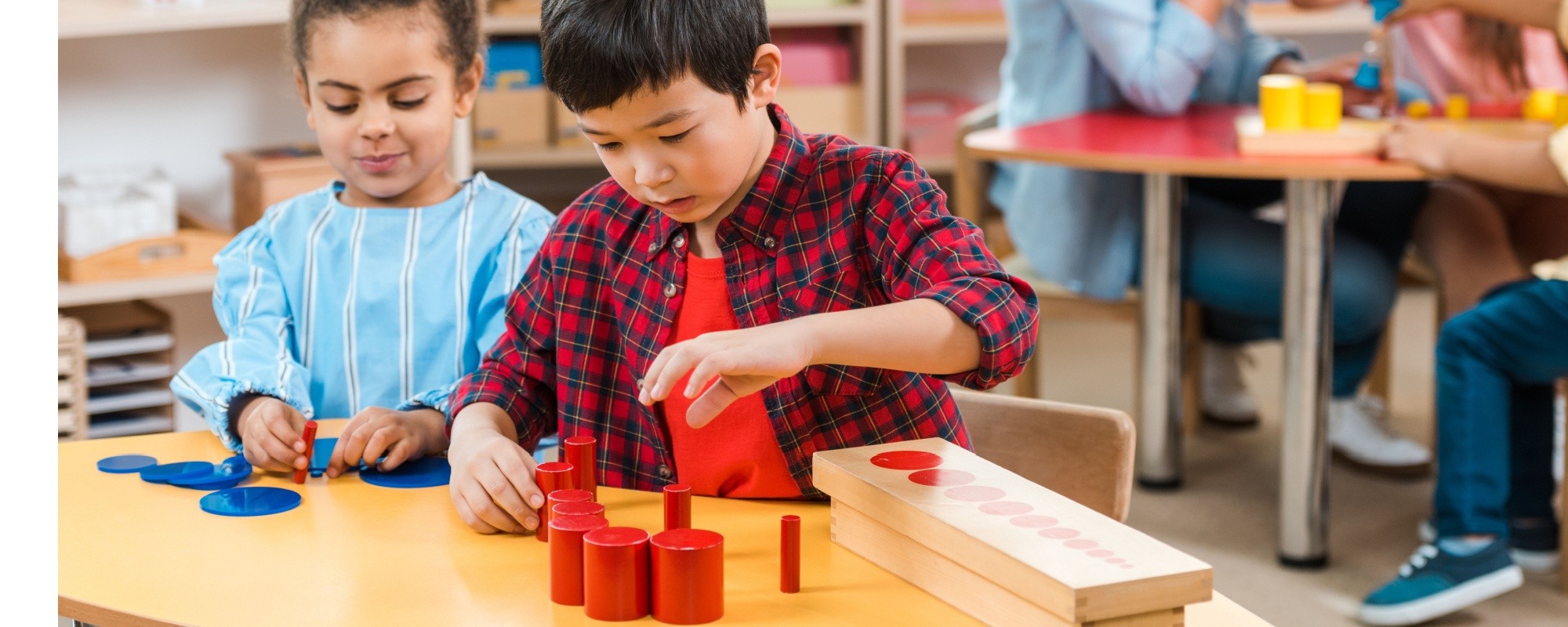
In a Montessori toddler program in Livermore, teachers guide children in developing social-emotional skills with consistent practice and clear steps. A significant aspect of this effort is the prepared environment, which acts as the “third teacher.” This room is outfitted with hands-on materials and minimalistic designs so that kids can get up, participate in collective projects, and pick what to do next. Every kid gets the opportunity to choose their own work, which fosters independence and confidence. This blend of liberty and structure supports kids in feeling secure as they navigate collaborating with peers, processing emotions, and managing everyday transitions.
Do’s And Don’ts For Promoting Social Skills In Children:
- Allow children time to practice one skill until they master it.
- Do let them choose what to do and proceed at their own rate.
- Do step in to direct, not to lead, so they figure it out themselves.
- Model nice talk and demonstrate word tinkering.
- Don’t push kids or impose group work too soon.
- Don’t punish mistakes; use them as time to teach.
- Don’t speak over kids or dismiss their voice in circle talks.
A big part of social learning is collaborative work. When kids collaborate on easy tasks, such as making a puzzle or launching a tiny garden, they learn to take turns, assert themselves, and hear others. Group work allows them to witness how their behaviors can assist or sabotage their peers. Teaming up, children begin to notice each other’s needs and emotions. Teachers organize group work appropriate to each child’s ability and age so that everyone can participate and have a sense of worth.
Figuring out how to settle disputes and manage intense emotions ties kids to close friends. Teachers observe and intervene with soothing phrases, demonstrating to kids how to express feelings and request assistance. They instruct one step at a time, such as how to request a turn or how to say ‘stop’. Through time and encouragement, children begin to manage their anger, take turns, and apologize. These skills require ample practice, and teachers provide patient assistance daily.
The entire class becomes a mini community wherein every child can assume a position. Teachers discuss kindness, assisting, and honor for everyone. Ensuring that each child feels safe and heard, the group bonds together. The teacher’s consistent assistance and the room’s configuration help every student feel a sense of belonging, which is essential for social-emotional development.
The Prepared Livermore Classroom
In a Montessori toddler program in Livermore, the classroom isn’t just a setting. It’s a dynamic piece of the education puzzle. This space is constructed with the needs of young children in mind, and every detail has an obvious function in creating a serene, inquisitive, and secure classroom environment.
|
Feature |
Description |
|
Child-sized furniture |
Allows toddlers to reach, move, and use objects with ease |
|
Open floor layout |
Gives room to move, walk, and explore safely |
|
Low shLet thes |
Let the children pick their own work and put it back |
|
Mixed-age grouping |
Makes room for peer learning and social growth |
|
Natural lighting |
Promotes focus and a calm mood |
|
Hands-on activity areas |
Supports real-life tasks and play, from art to pouring and sorting |
Natural materials, wood, cotton, glass, and metal, fill the room. These decisions count. They’re warm, easy on the eyes, and toddler safe. Teachers choose soft tones and real objects rather than loud colors or plastic. Baskets, wooden spoons, cloth napkins, and ceramic bowls adorn our daily work. These products teach kids what things feel like, how they operate, and what maintenance they require. For instance, a wooden puzzle or a glass pitcher for pouring water provides actual feedback. When a toddler drops a glass cup, it might shatter, but that’s the lesson: understanding cause and effect, care, and respect for their environment.
It’s such an easy room to set up because it allows the kids to naturally gravitate towards whatever they want to do. Open shelves accommodate trays and baskets for sorting, stacking, and matching. Toddlers can select an activity, engage with it, and return it. This loop of select, act, and cleanup fosters independence. The openness allows kids to observe their peers, participate, or operate independently if they desire. This flow supports both social play and solo time, which is essential to development at this age.
Security and protection are never a gamble. Teachers supervise the area, ensuring that it remains tidy and hazard-free. Everything is scaled to little hands, and breakable items only come out when teachers know a child is prepared. Soft rugs and low steps discourage injuries from falls. We aim to create an environment where kids are comfortable to experiment, fail, and experiment again, confident that assistance will be available if required.
The Parent-Teacher Partnership
The parent-teacher partnership is crucial in Montessori toddler programs. This connection keeps parents informed about their child’s day, development, and preferences. When Montessori educators and parents join forces, they can enhance learning for the child in the classroom and beyond.
A checklist for solid parent-teacher talk includes: set up regular talks, share updates about the child, listen well, keep an open mind, and share clear plans or goals. Parents should arrive with explicit questions or issues at meetings. Pick three or four main points to hit. These discussions are most effective when both parties arrive prepared to contribute and adjust strategies as necessary. For example, a parent requests advice on getting a shy child to participate in group play, and the teacher contributes observations on their social development in class. This assists both parties in learning and developing trust.
Parents can support what their kid learns at home with the same concepts as in the classroom. For example, if a child is learning how to pour water during a class, parents can allow them to pour drinks at home. Doing this often helps the child get better and demonstrates to them that what they learn matters in all areas of life. Parents can read books their child enjoys, apply simple math to chores, or ask their child to assist with setting the table. These little things keep education flowing beyond the classroom.
Attending school events is essential. When parents become involved, whether it’s a class trip, a parent night, or a holiday event, it helps build a tight-knit school community. These occasions allow parents to experience the Montessori environment in action, connect with other families, and gain new inspiration for home. It demonstrates to the child that their family values their school life.
Parent feedback helps teachers make better plans for each child. If a parent mentions their child is struggling with sleep or is curious about a new subject, teachers can modify lessons or provide additional support accordingly. This back-and-forth is founded on trust and enables each child to receive what they need to do well.
Beyond Classroom Learning
In our local Montessori preschool programs in Livermore, the classroom transcends traditional boundaries. Montessori teachers utilize the world outside as an extension of the child’s surroundings, sculpting development through authentic encounters. Learning beyond the classroom walls is essential in the Montessori approach. Kids roam in gardens and on playgrounds, where they develop both strength and emotional equilibrium. Basic skills like running, jumping, or gardening strengthen their little muscles and instill patience and nurture. Energy fixes and outdoor adventures keep kids’ energy even and spirits balanced, sustaining both wellness and attention. Innovations like the Edible Schoolyard, where kids aid in growing and picking plants, instill a feeling of connection with nature and food. Through these experiential activities, they gain lessons about nutrition and food origins, developing habits that last a lifetime.
Field trips and community work are central to the Montessori philosophy. By visiting local farms, markets, or parks, Montessori students get a glimpse of how things work outside the classroom walls. These excursions allow them to inquire, observe firsthand, and interact with individuals beyond their classroom. Community engagement, such as elder visits or collaborative murals, cultivates social skills and empathy. Teachers ensure these excursions are secure and significant, encouraging kids to observe closely and reason independently.
Even more growth opportunities exist outside the classroom walls. Group work actually teaches toddlers language and teamwork. Arts and sports programs build confidence and allow children to express their own thoughts. Language sessions, music, and crafts enhance their learning, helping them articulate what they feel and see. Teachers are guides, not leaders, observing how children respond and transform during these exercises. Skillful Montessori educators rely on their keen observations to customize lessons that will support each child’s unique learning style.
Hands-on, real-world experience is at the heart of Montessori learning. Children participate in everyday chores, such as setting the table or watering plants, that instill self-reliance and a sense of accomplishment. Frequent parent communication, via emails or daily eyeball check-ins, keeps everyone engaged and can nip issues in the bud.
Conclusion
Teachers in a Montessori toddler program in Livermore navigate learning with precision, compassion, and intent. They’re allowed to move, touch, and experiment to their hearts’ content. Teachers observe, intervene with gentle language or materials, then retreat to give children space to develop. Children begin to nurture and share. The room is secure and stable, with much to interest and occupy. We’re in constant communication with parents and teachers, so kids are empowered both at home and at school. Excursions and walks allow children to view the world with renewed eyes. To watch your child attempt, stumble, and attempt again with delight, contact a nearby Montessori school and request to visit.
Frequently Asked Questions
1. What Is The Role Of A Teacher In A Montessori Toddler Program?
Teachers in a Montessori preschool are guides who observe each child’s needs, introduce activities, and support independent learning to enhance their educational journey.
2. How Do Montessori Teachers Guide Learning For Toddlers?
Montessori educators provide manipulative activities, illustrate new topics, and permit toddlers to investigate freely in a Montessori preschool environment, subtly steering focus and building confidence in each child.
3. How Are Social-Emotional Skills Developed In A Montessori Classroom?
Teachers in a local Montessori preschool model respect, empathy, and cooperation, assisting Montessori students in articulating emotions and resolving conflicts.
4. What Is A Prepared Montessori Classroom In Livermore Like?
The Montessori classroom environment is neat, peaceful, and welcoming, with age-appropriate materials available, allowing Montessori students to pick their own activities and learn through discovery.
5. How Do Parents And Teachers Work Together In A Montessori Program?
Parents and teachers in Montessori preschools will be communicating regularly, sharing observations to nurture each child’s growth at home and school, fostering a beautiful partnership.
Take The First Step Toward A Strong Montessori Toddler Foundation
Ready to explore Montessori toddler programs in Livermore? Whether you’re just beginning your search or close to enrolling, we invite you to experience Fountainhead Montessori in person. Our Livermore campus offers a thoughtfully designed toddler program that supports early independence, confidence, and social development in a calm, nurturing environment, with optional before- and after-care for busy families.
Click below to schedule a personal tour, download our free parent guide, or view our transparent tuition rates. Have questions or want help deciding if a Montessori toddler program is right for your child? Our admissions team is happy to help you find the best fit for your family.






Let us know what you think about this post
Put your Comment Below: