

Choosing the best preschool in Danville requires families to look beyond surface-level features and focus on the deeper elements that shape a child’s early learning experience. Among these, curriculum stands out as one of the most influential factors. A well-structured preschool curriculum is not just a schedule of activities—it is the foundation that guides how children explore ideas, interact with others, and begin forming the habits of lifelong learners. It plays a central role in shaping cognitive development, emotional growth, and early academic readiness.
During the early childhood years, children absorb information rapidly and develop core skills that influence how they approach learning for the rest of their lives. This is why curriculum quality matters so significantly. It determines whether children are simply introduced to basic concepts or are actively engaged in meaningful experiences that strengthen critical thinking, communication, independence, and confidence. At Fountainhead Montessori School of Danville, the curriculum is intentionally designed to nurture the whole child through a balanced approach that integrates academic learning with social, emotional, and practical life development.
A strong preschool curriculum goes far beyond teaching letters, numbers, or memorization-based tasks. It creates an environment where children are encouraged to explore, ask questions, solve problems, and learn at their own pace. This type of learning builds curiosity and self-motivation, both of which are essential for long-term academic success. When children are supported through a thoughtfully designed curriculum, they are more likely to develop a positive relationship with learning that continues well beyond the preschool years.
Key Takeaways
- Curriculum is a foundational element that influences a child’s cognitive, social, emotional, and physical development.
- A high-quality preschool curriculum encourages independence, creativity, curiosity, and critical thinking skills.
- Hands-on learning experiences strengthen understanding and improve long-term knowledge retention.
- Individualized instruction allows children to learn at their own developmental pace.
- Social-emotional learning supports emotional regulation, empathy, and positive peer relationships.
- Montessori-based approaches emphasize self-directed learning, responsibility, and practical life skills.
- Curriculum quality plays a direct role in kindergarten readiness and future academic performance.
Why Curriculum Matters In Early Childhood Education
The preschool years represent one of the most important stages in a child’s development. During this time, children absorb new information at a remarkable pace while also forming the habits, behaviors, and attitudes that shape how they approach learning in the future. A well-structured curriculum serves as the guiding framework for these experiences, ensuring that learning is intentional, developmentally appropriate, and aligned with how young children naturally grow and explore the world around them.
A thoughtfully designed curriculum does not simply deliver content—it creates a pathway for holistic development. It helps children build essential foundations across multiple areas of growth, including language, cognition, physical coordination, and social interaction. When these elements are integrated effectively, children are more likely to develop confidence, curiosity, and a strong readiness for future academic challenges.
A high-quality preschool curriculum helps children:
- Build language and communication skills through listening, speaking, and storytelling activities
- Develop early math concepts such as counting, patterns, and basic problem-solving
- Strengthen fine motor skills (hand control, drawing, writing) and gross motor skills (movement, balance, coordination)
- Learn cooperation, sharing, and positive social interaction with peers
- Build self-confidence and independence through guided exploration
- Cultivate curiosity, imagination, and creative thinking
When curriculum design aligns with developmental needs, learning becomes a natural and enjoyable process rather than a forced task.
How A Montessori Curriculum Supports Whole-Child Development
Academic Growth Through Exploration
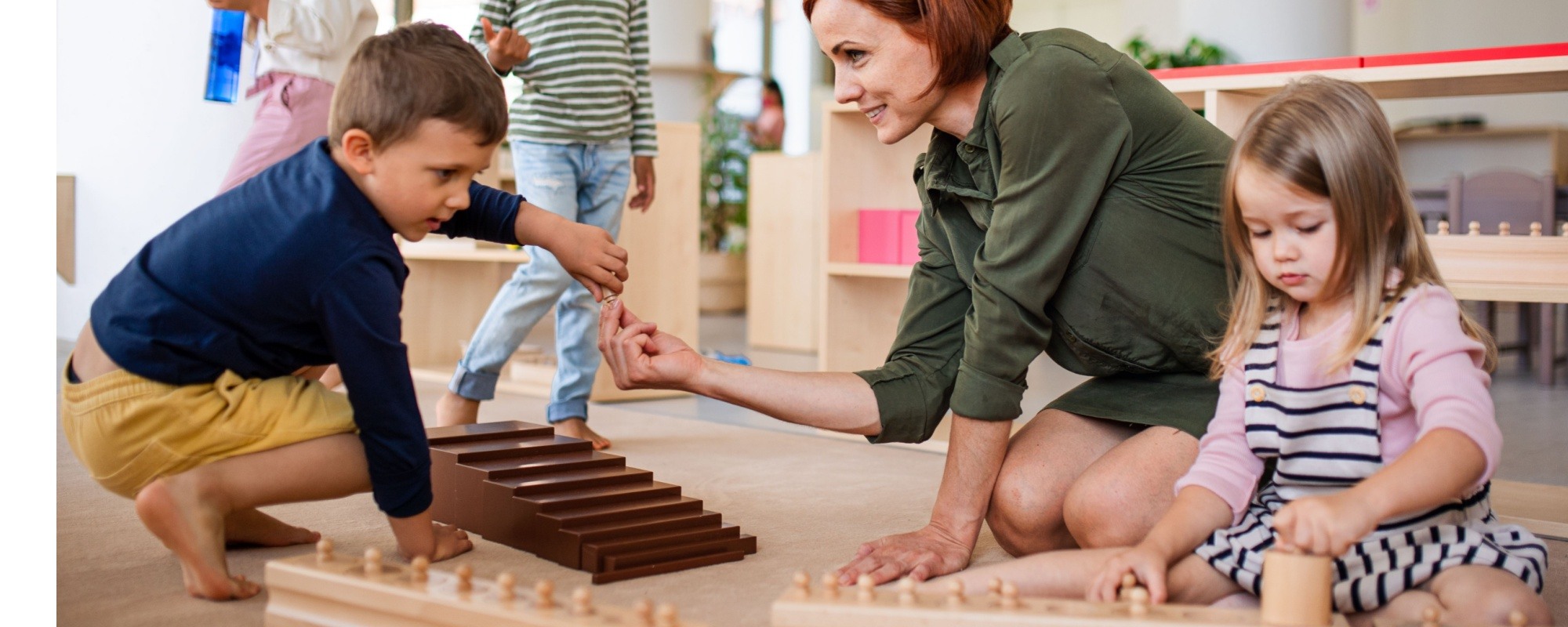
A Montessori curriculum emphasizes active, hands-on learning rather than passive instruction. Instead of simply receiving information, children engage directly with materials that allow them to explore concepts in a concrete and meaningful way. These specially designed learning tools help bridge the gap between abstract ideas and real-world understanding, making complex concepts more accessible to young learners.
Through exploration, children develop problem-solving skills, logical thinking, and a deeper understanding of academic concepts. This approach encourages them to become active participants in their learning journey, which strengthens long-term retention and intellectual growth.
Emotional And Social Development
In addition to academic learning, a Montessori curriculum places strong emphasis on emotional intelligence and social development. Children are guided to understand themselves and others within a structured yet supportive environment.
Key areas of development include:
- Respect for others and appreciation of differences
- Conflict resolution and peaceful communication
- Responsibility for personal actions and shared environments
- Cooperation and collaboration within a classroom community
- Self-discipline, independence, and emotional self-regulation
These skills are essential not only for academic success but also for building meaningful relationships and navigating real-world situations with confidence.
The Role Of Individualized Learning In Preschool Success
Every child develops at their own unique pace, with different strengths, interests, and learning styles. High-quality preschool curricula recognize this diversity and provide flexibility that allows educators to support each child as an individual rather than expecting uniform progress across all learners.
Meeting Children Where They Are
Individualized learning focuses on observing each child’s readiness level and adapting instruction accordingly. Instead of following a rigid, one-size-fits-all approach, educators provide learning experiences that match the child’s developmental stage and natural curiosity.
This approach offers several key benefits:
- Builds stronger self-confidence by ensuring achievable learning experiences
- Increases engagement through personalized activities and interests
- Reduces frustration by avoiding developmentally inappropriate expectations
- Supports deeper mastery of skills through paced learning
- Encourages intrinsic motivation and a positive attitude toward learning
Over time, this individualized approach helps children develop a strong sense of capability and ownership over their learning process.
Why Hands-On Learning Creates Stronger Educational Outcomes
Young children learn most effectively through direct experience. Hands-on learning engages multiple senses at once, allowing children to see, touch, move, and interact with materials in a way that deepens understanding and strengthens memory retention.
Examples Of Hands-On Learning Activities
A well-rounded preschool curriculum may include a variety of interactive learning experiences such as:
- Practical life exercises (pouring, sorting, dressing activities)
- Simple science experiments and nature exploration
- Sensory-based activities that stimulate observation and discovery
- Creative art projects that encourage expression and fine motor development
- Mathematical manipulatives that introduce counting, patterns, and measurement
- Language development activities using physical objects and storytelling tools
These experiences transform learning into an active process of discovery, allowing children to develop critical thinking and problem-solving skills naturally.
How Social-Emotional Learning Enhances Academic Achievement
Academic success is closely connected to a child’s emotional well-being and ability to interact positively with others. A curriculum that integrates social-emotional learning (SEL) helps children build the emotional intelligence necessary to thrive in both academic and social environments.
Key Social-Emotional Skills Developed In Preschool
Through intentional curriculum design, children learn how to:
- Identify and understand their emotions
- Express feelings in healthy and appropriate ways
- Develop empathy and consider the perspectives of others
- Build friendships and engage in cooperative play
- Solve conflicts using respectful communication
- Develop resilience when facing challenges or setbacks
Children with strong social-emotional skills are often better able to focus, participate in classroom activities, and adapt to new learning environments.
The Connection Between Curriculum And Kindergarten Readiness
One of the primary purposes of a high-quality preschool curriculum is to prepare children for a successful transition into kindergarten and the years of learning that follow. Kindergarten readiness extends far beyond knowing the alphabet or counting numbers. It involves developing the academic, social, emotional, physical, and cognitive skills children need to participate confidently in a structured classroom environment.
A thoughtfully designed curriculum gradually introduces these essential skills through engaging, age-appropriate experiences that match children's developmental stages. Rather than placing pressure on children to achieve academic milestones prematurely, an effective curriculum encourages steady progress through hands-on exploration, guided practice, collaborative learning, and meaningful daily routines. This balanced approach allows children to develop competence while maintaining their natural enthusiasm for learning.
As children participate in a variety of learning experiences, they become more comfortable following routines, interacting with peers, solving problems independently, communicating their ideas, and managing everyday classroom responsibilities. These experiences help reduce anxiety when entering kindergarten because children are already familiar with many of the expectations they will encounter in a more structured educational setting.
Kindergarten readiness also means helping children develop confidence in their own abilities. When children experience success through consistent encouragement and developmentally appropriate challenges, they become more willing to participate in classroom discussions, ask questions, try new activities, and persevere when learning becomes more difficult. This confidence often has a lasting impact on future academic achievement and personal growth.
A strong preschool curriculum also recognizes that readiness looks different for every child. Instead of focusing solely on standardized milestones, educators observe each child's progress across multiple developmental areas and provide individualized support where needed. This ensures that children enter kindergarten with a well-rounded foundation rather than isolated academic skills.
Areas Of Kindergarten Readiness
A comprehensive preschool curriculum supports children's development across several interconnected areas that contribute to overall school readiness.
Cognitive Skills
Cognitive development provides the foundation for future academic learning. Through carefully planned activities, children develop the ability to think logically, recognize patterns, solve problems, remember information, and make meaningful connections between new and existing knowledge.
Important cognitive skills include:
- Early literacy development through letter recognition, phonemic awareness, vocabulary building, and beginning reading activities.
- Number recognition, counting, sorting, sequencing, and understanding basic mathematical concepts.
- Problem-solving and reasoning through puzzles, hands-on exploration, and open-ended activities.
- Critical thinking that encourages children to ask questions, make observations, compare ideas, and draw conclusions.
- Memory development and attention skills that support classroom learning.
- Curiosity and inquiry that inspire children to explore new concepts with confidence.
These cognitive abilities establish the academic foundation children will continue building throughout elementary school.
Social Skills
Success in kindergarten depends not only on academic knowledge but also on a child's ability to interact positively with teachers and classmates. Preschool provides daily opportunities for children to develop social competence through collaborative play, group activities, and guided interactions.
Essential social skills include:
- Cooperating with classmates during group activities and shared learning experiences.
- Communicating thoughts, ideas, and feelings respectfully.
- Listening attentively to teachers and peers.
- Following classroom rules, routines, and multi-step instructions.
- Taking turns, sharing materials, and resolving conflicts appropriately.
- Demonstrating empathy, kindness, and respect for others.
- Working independently while also participating effectively in group settings.
Strong social skills help children build friendships, adjust to classroom expectations, and feel more comfortable in new learning environments.
Emotional Readiness
Emotional development is equally important for kindergarten success. Children who understand and manage their emotions are often better prepared to handle challenges, adapt to change, and participate confidently in classroom activities.
A quality curriculum helps children develop:
- Self-confidence and positive self-esteem.
- Emotional awareness and healthy expression of feelings.
- Patience and self-control during structured activities.
- Resilience when facing mistakes or challenges.
- Independence in making age-appropriate decisions.
- Confidence in trying new experiences and solving problems.
These emotional skills contribute to greater classroom engagement and overall well-being.
Physical Skills
Physical development supports children's ability to participate comfortably in both academic and recreational activities. Preschool curricula incorporate opportunities for children to strengthen fine motor, gross motor, and self-care skills through everyday experiences.
Important physical skills include:
- Developing proper pencil grip and early handwriting control.
- Strengthening fine motor coordination through cutting, drawing, tracing, and manipulating small objects.
- Improving hand-eye coordination through puzzles, building activities, and creative projects.
- Building balance, coordination, and physical confidence through active play and movement.
- Practicing self-care skills such as dressing independently, washing hands, organizing personal belongings, and managing daily routines.
- Developing endurance and body awareness needed for classroom participation.
These physical abilities support children's independence while preparing them for the daily demands of kindergarten.
Language And Communication Skills
Language development influences nearly every aspect of learning. Preschool helps children build strong communication skills that enable them to express ideas, understand instructions, and participate actively in classroom discussions.
Children develop:
- Expanding vocabulary through conversations and storytelling.
- Listening comprehension and following directions.
- Speaking clearly and confidently.
- Asking thoughtful questions.
- Participating in discussions with peers and teachers.
- Early reading and writing readiness.
Strong communication skills help children become active learners and confident participants in classroom life.
Independence And Self-Management
Kindergarten introduces greater expectations for personal responsibility. Preschool helps children gradually develop the independence needed to manage classroom routines with minimal assistance.
Children learn to:
- Complete simple tasks independently.
- Care for classroom materials and personal belongings.
- Make appropriate choices throughout the day.
- Transition between activities smoothly.
- Follow schedules and routines.
- Take responsibility for their actions.
- Develop organizational habits that support learning.
These practical life skills help children feel capable and prepared as they enter elementary school.
Together, these cognitive, social, emotional, language, physical, and practical life skills prepare children to begin kindergarten with confidence, enthusiasm, and the ability to adapt successfully to new academic expectations. Rather than simply preparing children to meet school requirements, a comprehensive preschool curriculum helps them develop the habits, attitudes, and abilities that support lifelong learning.
What Makes A Curriculum Effective In The Best Preschool In Danville?
An effective preschool curriculum is far more than a collection of daily lesson plans. It is a thoughtfully designed educational framework that nurtures every aspect of a child's development while recognizing that young children learn best through meaningful experiences, active exploration, and supportive relationships. The strongest curricula create a balance between academic preparation, creative expression, social-emotional development, physical growth, and practical life skills, ensuring that children develop into confident, capable, and enthusiastic learners.
Rather than emphasizing memorization or standardized instruction, a high-quality curriculum encourages children to think independently, ask questions, experiment with ideas, and develop a genuine curiosity about the world around them. Learning experiences are intentionally designed to be engaging, hands-on, and developmentally appropriate so that children remain motivated while steadily building new skills.
An effective curriculum is also flexible enough to recognize that every child develops differently. Skilled educators continually observe children's progress, adjust learning experiences based on individual readiness, and provide guidance that challenges children without creating unnecessary frustration. This personalized approach allows every child to experience success while developing confidence in their own abilities.
Equally important is the role of relationships. A strong curriculum fosters meaningful connections between teachers, children, and families, creating a supportive learning community where children feel safe, respected, and encouraged to grow. When children experience emotional security alongside academic challenge, they are more willing to explore new ideas, solve problems, and persevere through difficult tasks.
Characteristics Of A High-Quality Curriculum
The most effective preschool curricula typically include:
- Child-centered learning that respects each child's interests, developmental stage, and natural curiosity.
- Hands-on, experiential learning that allows children to explore concepts through meaningful activities and real-world experiences.
- Individualized instruction that adapts to each child's pace, strengths, and learning style.
- A balanced approach that supports academic, social, emotional, creative, and physical development equally.
- Strong emphasis on social-emotional learning, helping children develop empathy, resilience, confidence, and self-regulation.
- Practical life experiences that build independence, responsibility, organization, and everyday problem-solving skills.
- Qualified educators who observe carefully, provide individualized guidance, and encourage independent thinking.
- Purposeful classroom environments that promote exploration, concentration, and self-directed learning.
- Ongoing assessment and observation used to monitor growth and tailor instruction rather than simply measure performance.
- Play-based learning opportunities that recognize play as an essential part of cognitive and social development.
- Rich language and literacy experiences that foster communication, vocabulary, storytelling, and early reading skills.
- Meaningful mathematics and science exploration through hands-on discovery and inquiry-based activities.
- Creative expression through art, music, dramatic play, and movement that encourages imagination and innovation.
- Active family engagement, ensuring learning continues beyond the classroom through strong partnerships with parents.
- A safe, inclusive, and nurturing environment where children feel respected, valued, and encouraged to reach their full potential.
At Fountainhead Montessori School of Danville, these educational principles come together to create a learning environment where children are supported academically, socially, emotionally, physically, and intellectually. Guided by Montessori philosophy, the curriculum encourages curiosity, independence, responsibility, and purposeful exploration while respecting each child's individual pace of development. By combining carefully prepared learning environments, compassionate educators, hands-on experiences, and strong family partnerships, the school helps children build the confidence, knowledge, and lifelong learning habits needed to thrive in kindergarten and throughout their educational journey.
Conclusion
Curriculum plays a defining role in shaping what truly sets the best preschool in Danville apart. It is more than a framework for daily lessons—it is the foundation that influences how children interpret the world, develop essential life skills, and build the confidence needed to approach new challenges. A thoughtfully designed curriculum supports every aspect of early development, from cognitive growth and language acquisition to emotional regulation, social interaction, and physical coordination. When these areas are intentionally integrated, children are better prepared not only for school success but also for lifelong learning.
A strong preschool curriculum ensures that learning is purposeful, balanced, and developmentally appropriate. It provides structure while still allowing room for exploration, creativity, and individuality. This balance is essential in early childhood education, where children thrive in environments that respect their natural curiosity while gently guiding them toward important academic and social milestones. Over time, this approach helps children develop independence, resilience, and a genuine love for learning.
At Fountainhead Montessori School of Danville, the curriculum is carefully designed to support the whole child through a holistic and individualized approach. Children engage in hands-on learning experiences that encourage discovery and active participation rather than passive instruction. Educators observe each child’s unique developmental path and provide guidance that aligns with their individual strengths, interests, and readiness levels. This ensures that every child receives meaningful support as they grow academically, socially, and emotionally.
By integrating academic foundations with practical life skills and emotional development, the school creates a learning environment where children can thrive at their own pace. This balanced approach not only prepares children for kindergarten but also equips them with the habits, mindset, and confidence needed for long-term success in school and beyond.
Frequently Asked Questions
1. Why Is Curriculum Important In Preschool?
Curriculum provides the foundation and structure for early learning experiences. It guides how children develop essential skills in academics, communication, social interaction, emotional awareness, and physical coordination during their most formative years.
2. How Does A Montessori Curriculum Differ From Traditional Preschool Programs?
A Montessori curriculum emphasizes self-directed learning, hands-on exploration, and individualized instruction. It allows children to learn at their own pace while using specially designed materials that promote independence, concentration, and deeper understanding.
3. Does Curriculum Affect Kindergarten Readiness?
Yes, curriculum has a direct impact on kindergarten readiness. A strong curriculum helps children develop early literacy, numeracy, social skills, emotional regulation, and independence—key abilities needed for a smooth transition into elementary school.
4. Why Is Hands-On Learning Important For Preschool Children?
Hands-on learning engages children actively in the learning process. By using their senses and interacting directly with materials, children build stronger comprehension, improve memory retention, and develop critical thinking skills more effectively.
5. How Does Social-Emotional Learning Fit Into A Preschool Curriculum?
Social-emotional learning is an essential part of preschool education. It helps children understand and manage emotions, build healthy relationships, develop empathy, and learn problem-solving skills that support both academic and personal growth.
6. What Should Parents Look For When Evaluating A Preschool Curriculum?
Parents should look for a curriculum that supports whole-child development, encourages active and hands-on learning, adapts to individual learning needs, and integrates both academic and social-emotional growth in a balanced way.
7. How Does Fountainhead Montessori School Of Danville Support Individualized Learning?
Fountainhead Montessori School of Danville uses a Montessori-based approach that allows educators to closely observe each child’s progress and tailor learning experiences to their developmental stage, interests, and abilities. This ensures that every child receives personalized guidance and support.
Take The First Step Toward A Brighter Beginning
Ready to learn how Montessori philosophy shapes early education? Whether you’re just getting familiar with the approach or considering enrollment, we invite you to experience Fountainhead Montessori in person. Our campuses in Danville and Livermore offer toddler-through-preschool programs grounded in hands-on learning, independence, and respect for each child’s natural development, with optional before- and after-care for busy families.
Click below to schedule a personal tour, download our free parent guide, or review our transparent tuition rates. Have questions along the way? Our admissions team is here to help you decide if Montessori is the right foundation for your child’s early years.
Schedule a Tour | Download Our Parent Guide | View Tuition




Let us know what you think about this post
Put your Comment Below: