

When parents begin exploring early childhood education options, one of the most common search phrases they use is “Montessori preschool near me.” This simple query reflects something deeper than convenience—it represents a desire to find a learning environment that aligns with a child’s developmental needs, family values, and daily routines. In today’s fast-paced world, proximity and quality often go hand in hand when making decisions about a child’s early education.
For families in Danville, California, schools like Fountainhead Montessori School of Danville often appear in these searches because parents are looking for a program that offers both accessibility and a strong educational foundation. Montessori education appeals to families who want their children to grow independently, confidently, and with a genuine love for learning.
Key Takeaways
- Parents search “Montessori preschool near me” to find convenience and quality in one place.
- Location plays a major role in daily routines, commuting, and consistency for children.
- Montessori education emphasizes independence, hands-on learning, and child-led development.
- Parents prioritize environments that feel safe, nurturing, and developmentally appropriate.
- Trust, communication, and community connection are key factors in preschool selection.
- The right Montessori program supports both academic and emotional growth
Understanding Why Parents Use “Near Me” Searches
Convenience Shapes Daily Family Life
Parents of young children often manage highly structured and time-sensitive routines, from morning preparation to school drop-offs and work schedules. Because of this, searching for a “Montessori preschool near me” is often driven by the need to simplify everyday logistics. A nearby preschool reduces time spent in traffic, minimizes early morning stress, and allows families to maintain a more predictable rhythm throughout the day.
Convenience also plays a major role in a child’s emotional experience. Shorter travel times mean children arrive at school more relaxed, settled, and ready to engage in learning activities. Over time, this consistency helps establish a smoother transition between home and school life, making daily routines feel less rushed and more balanced for both parents and children.
Local Relevance Builds Trust
When parents search for nearby preschools, they are not only looking for convenience—they are also seeking familiarity and trust. Search engines naturally prioritize local results, which helps parents discover schools within their own community. This proximity often creates a sense of reassurance, as local schools are easier to visit, observe, and stay connected with.
Being part of the same community also strengthens accountability and communication. Parents tend to feel more confident in schools that are nearby because they can easily attend meetings, participate in events, and build relationships with educators. This sense of accessibility fosters a stronger bond between families and the school environment, making trust an important factor in the decision-making process.
What Parents Expect From A Montessori Preschool
A Child-Centered Learning Approach
Montessori education is built around the belief that children learn best when they are active participants in their own development. Parents searching for a Montessori preschool near them often expect classrooms that prioritize independence, curiosity, and hands-on exploration rather than passive instruction.
In this type of environment, children are encouraged to choose activities that match their interests and developmental readiness. Materials are designed to be self-correcting and engaging, allowing children to learn through discovery rather than constant direction. Parents value this approach because it helps children build confidence, problem-solving skills, and a genuine love for learning from an early age.
Structured Freedom In Learning
While Montessori education is known for its flexibility, it is not unstructured. Parents often look for a careful balance between freedom and guidance—an environment where children can explore independently while still being supported by a thoughtfully designed learning framework.
Classrooms are intentionally organized to promote focus and order, with clear routines and expectations that help children feel secure. Teachers act as guides who observe each child’s progress and gently introduce new challenges when appropriate. This combination of independence and structure reassures parents that their child is developing both academically and emotionally in a well-rounded way.
Why Location Matters In Preschool Selection
Reducing Stress In Daily Routines
Choosing a preschool close to home can significantly reduce the daily pressure that families experience. Shorter commutes mean less time spent in traffic and fewer logistical challenges during busy mornings or end-of-day pick-ups. This convenience allows parents to better manage work schedules while still being actively involved in their child’s early education.
For children, reduced travel time also contributes to a more positive school experience. Arriving at school without long or tiring commutes helps them transition more smoothly into classroom activities. Over time, this ease of routine can contribute to better mood, stronger engagement, and a more positive association with school.
Building Consistency For Young Children
Consistency is essential in early childhood development, and proximity plays a key role in maintaining it. When a preschool is nearby, children are more likely to attend regularly, which strengthens their sense of routine and stability. This predictability helps young learners feel safe and confident in their environment.
Regular attendance also supports continuous learning, as children are able to fully engage in classroom activities without frequent interruptions. Over time, this consistency helps reinforce social connections, learning habits, and emotional security—all of which are foundational during the preschool years.
How Montessori Education Supports Early Development
Independence And Confidence Building
Montessori classrooms are intentionally designed to nurture independence from an early age. Instead of relying on constant adult instruction, children are encouraged to make simple decisions—such as choosing activities, managing learning materials, and completing tasks at their own pace. These everyday choices help children develop a strong sense of autonomy and responsibility.
As children complete tasks on their own, they naturally build confidence in their abilities. This growing self-assurance extends beyond academics and into social and emotional development. Over time, children learn to trust their judgment, take initiative, and approach new challenges with curiosity rather than hesitation. Parents often value this foundation because it supports long-term resilience and self-esteem.
Hands-On Learning Experiences
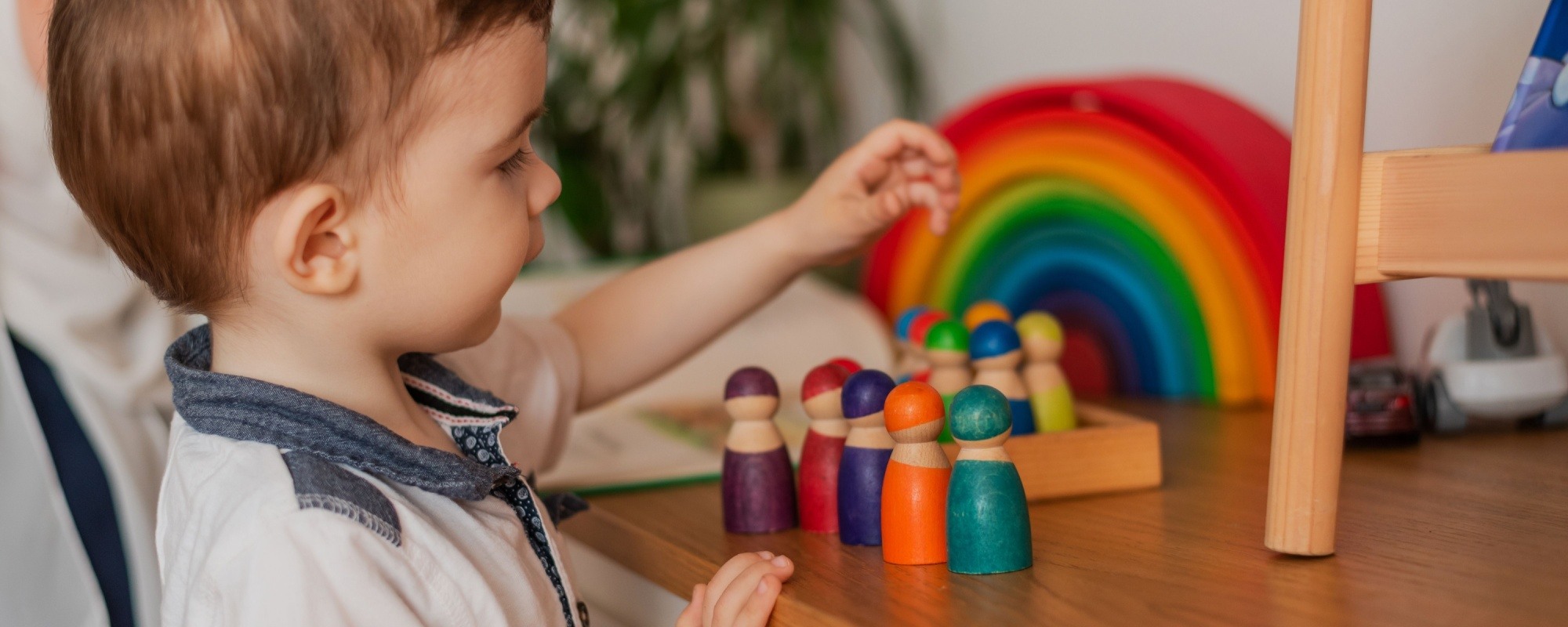
A core feature of Montessori education is its emphasis on tactile, hands-on learning. Rather than relying solely on abstract instruction, children interact with specially designed materials that make learning concepts concrete and engaging. These tools help bridge the gap between theory and real-world understanding.
Through activities like sorting, counting, pouring, building, and pattern recognition, children strengthen essential cognitive skills such as memory, concentration, and problem-solving. These experiences also support fine motor development and early academic readiness in areas like math, language, and science. Parents appreciate this approach because it allows children to learn by doing—an experience that often leads to deeper understanding and retention.
What Parents Look For In A Montessori Environment
Prepared Classroom Environments
Parents exploring Montessori preschools often pay close attention to the classroom environment itself. A well-prepared Montessori classroom is calm, organized, and intentionally arranged to encourage independent exploration. Every material has a designated place, and the space is designed to promote focus rather than overstimulation.
This sense of order helps children feel secure and confident as they move through their daily activities. When the environment is predictable and thoughtfully structured, children are better able to concentrate, make choices, and complete tasks without unnecessary distractions. Parents value this setup because it reflects a learning space that is both nurturing and purpose-driven.
Qualified And Supportive Educators
In a Montessori setting, educators take on the role of guides rather than traditional instructors. Instead of leading constant group instruction, they observe each child closely, identify developmental needs, and provide gentle guidance when appropriate. This approach allows children to progress naturally while still receiving meaningful support.
Parents often look for teachers who are patient, attentive, and deeply familiar with child development principles. The ability to step back while remaining engaged is a key part of the Montessori method. When educators strike this balance effectively, children feel empowered to explore independently while knowing support is always available when needed.
Why Trust And Community Matter In Preschool Decisions
Strong Communication With Families
Open and consistent communication between school and home is a major priority for parents. Families want to understand not only what their child is learning, but also how they are developing socially, emotionally, and behaviorally. Regular updates help parents stay informed and actively involved in their child’s early education journey.
Clear communication also builds confidence in the school’s approach. When educators share observations, progress reports, and insights, parents feel reassured that their child is being supported as an individual. This transparency strengthens trust and helps create a collaborative partnership between families and educators.
A Supportive Learning Community
Beyond academics, parents often look for a preschool that fosters a sense of belonging. A supportive learning community creates meaningful connections between families, teachers, and students, helping children feel more secure in their environment.
When families are engaged and connected, children benefit from a stronger sense of stability and social development. Community events, classroom involvement, and shared experiences all contribute to a positive school culture. Parents value this because it transforms preschool from just an educational setting into a nurturing extension of the home.
How Families Can Evaluate The Right Montessori Fit
Observing The Classroom Environment
One of the most effective ways for parents to evaluate a Montessori preschool is by observing the classroom in action. A visit provides insight into how children interact with materials, how they move within the space, and how they engage with one another. These observations can reveal whether the environment feels calm, purposeful, and aligned with Montessori principles.
Parents can also observe how teachers interact with students during learning activities. Rather than directing every step, educators should appear attentive and supportive while allowing children space to explore independently. These real-time observations often provide a clearer understanding than brochures or descriptions alone.
Asking About Learning Philosophy
Every Montessori program may interpret the philosophy slightly differently, so asking questions is an important part of the decision-making process. Parents benefit from understanding how the school applies Montessori principles in daily routines, curriculum design, and classroom management.
Questions about independence, discipline approaches, curriculum structure, and teacher training can help clarify whether the program aligns with family expectations. When parents and schools share a clear understanding of educational values, it creates a stronger foundation for a successful and long-term preschool experience.
Conclusion
The search for a “Montessori preschool near me” reflects far more than a simple need for convenience—it is part of a deeper, more intentional decision-making process that prioritizes a child’s early growth, emotional security, and long-term development. Parents are not only looking for a school that fits into their daily commute, but also for an environment that aligns with their values and supports how young children naturally learn and develop.
At its core, this search represents a desire for balance: a preschool that is close enough to make everyday routines manageable, yet strong enough in educational philosophy to positively shape a child’s foundation during these formative years. When families choose a Montessori setting, they are often seeking an approach that nurtures independence, curiosity, confidence, and a lifelong love of learning—qualities that extend well beyond the preschool years.
For families exploring options in Danville, schools like Fountainhead Montessori School of Danville demonstrate how Montessori education can successfully combine accessibility with a thoughtfully prepared, child-centered environment. By focusing on both academic readiness and personal development, such programs help children build essential life skills while feeling supported, understood, and encouraged every step of the way.
FAQs
1. Why Do Parents Search For “Montessori Preschool Near Me”?
Parents use this search to find convenient, high-quality early education options close to home that support their child’s development, safety, and daily routine needs.
2. What Makes Montessori Preschool Different From Traditional Preschool?
Montessori preschools emphasize child-led learning, hands-on exploration, and independence, allowing children to learn at their own pace rather than following a rigid, teacher-directed structure.
3. How Important Is Location When Choosing A Preschool?
Location is highly important because it directly affects daily schedules, travel time, consistency in attendance, and overall family convenience, especially for young children.
4. What Should Parents Look For In A Montessori Classroom?
Parents should look for calm and organized environments, accessible learning materials, opportunities for independent exploration, and teachers who guide rather than direct learning.
5. How Does Montessori Education Support Early Childhood Development?
Montessori education supports early development by fostering independence, strengthening problem-solving skills, improving focus and concentration, and encouraging emotional and social growth through hands-on learning experiences.
Take The First Step Toward A Brighter Beginning
Ready to learn how Montessori philosophy shapes early education? Whether you’re just getting familiar with the approach or considering enrollment, we invite you to experience Fountainhead Montessori in person. Our campuses in Danville and Livermore offer toddler-through-preschool programs grounded in hands-on learning, independence, and respect for each child’s natural development, with optional before- and after-care for busy families.
Click below to schedule a personal tour, download our free parent guide, or review our transparent tuition rates. Have questions along the way? Our admissions team is here to help you decide if Montessori is the right foundation for your child’s early years.
Schedule a Tour | Download Our Parent Guide | View Tuition






Let us know what you think about this post
Put your Comment Below: