

A Montessori preschool is a child-led early education environment that adheres to the Montessori method, developed by Dr. Maria Montessori. In these schools, children learn by doing, with hands-on materials and real work. Kids learn at their own pace, frequently in multi-age clusters under the guidance of certified instructors. Self-direction, respect, and nurturing life and study skills are emphasized. Most kids start Montessori preschool around 2.5 to 3 years old. However, some programs accept children slightly younger or older. Classrooms typically feature quiet corners, uncomplicated materials, and an emphasis on structure. They always ask for the right starting age and what sets Montessori apart. The following paragraphs unpack these points.
Key Takeaways
- Montessori preschool focuses on child-driven education, self-reliance, and an organized setting that promotes investigation and innovation.
- Nurturing intellectual, social, and emotional development through hands-on activities, mixed-age classrooms, and individual learning paths, the Montessori approach emphasizes the importance of a child's natural curiosity and desire to learn. Children should begin attending a Montessori preschool when they are around two and a half to three years old, as this is when they are typically ready to engage in the structured yet flexible environment that Montessori education offers.
- Guided by teachers who observe and support each child’s interests and bolstered by ongoing professional development, the education is top-notch.
- Enrollment is usually best around 2.5 to 3 years old, but readiness, independence, and curiosity trump all.
- Montessori education fosters whole child development, including cognitive growth, emotional intelligence, social skills, and physical dexterity, with intentional tasks and encouragement.
- Parents are critical in promoting independence in the home, collaborating with teachers, and establishing environments conducive to Montessori ideals.
What Is Montessori Preschool?
Montessori education is an educational philosophy that puts the young child at the center, emphasizing early childhood development through self-selected activities and autonomy. Our mission is to inspire children to develop a lifelong passion for learning within a Montessori classroom. Typically, these classrooms group preschoolers ages 3 to 6 together, enabling them to learn from and with one another in a tranquil, structured environment, while gently guiding them toward personal growth and cognitive development.
|
Feature |
Montessori Preschool |
Traditional Preschool |
|
Structure |
Child-led, mixed-age classroom |
Teacher-led, single-age |
|
Philosophy |
Independence, respect, self-motivation |
Group instruction, set pace |
|
Key Features |
Hands-on, daily-life skills, autonomy |
Worksheets, group tasks |
|
Environment |
Prepared, calm, sensory-rich |
Standard classroom setup |
1. The Philosophy
Based on respect for the child, Montessori education emphasizes that children learn best when their interests and choices are respected. The method seeks to cultivate the entire child, not merely scholastic abilities. Children learn at their own pace, which fosters confidence and self-motivation.
Hands-on learning is fundamental to Montessori. Children work with actual material rather than just images or worksheets. This teaches them to think outside the box, innovate, and make sense of the world. Rather than employing reward or punishment, the Montessori method depends on each child’s inherent zest for knowledge.
2. The Environment
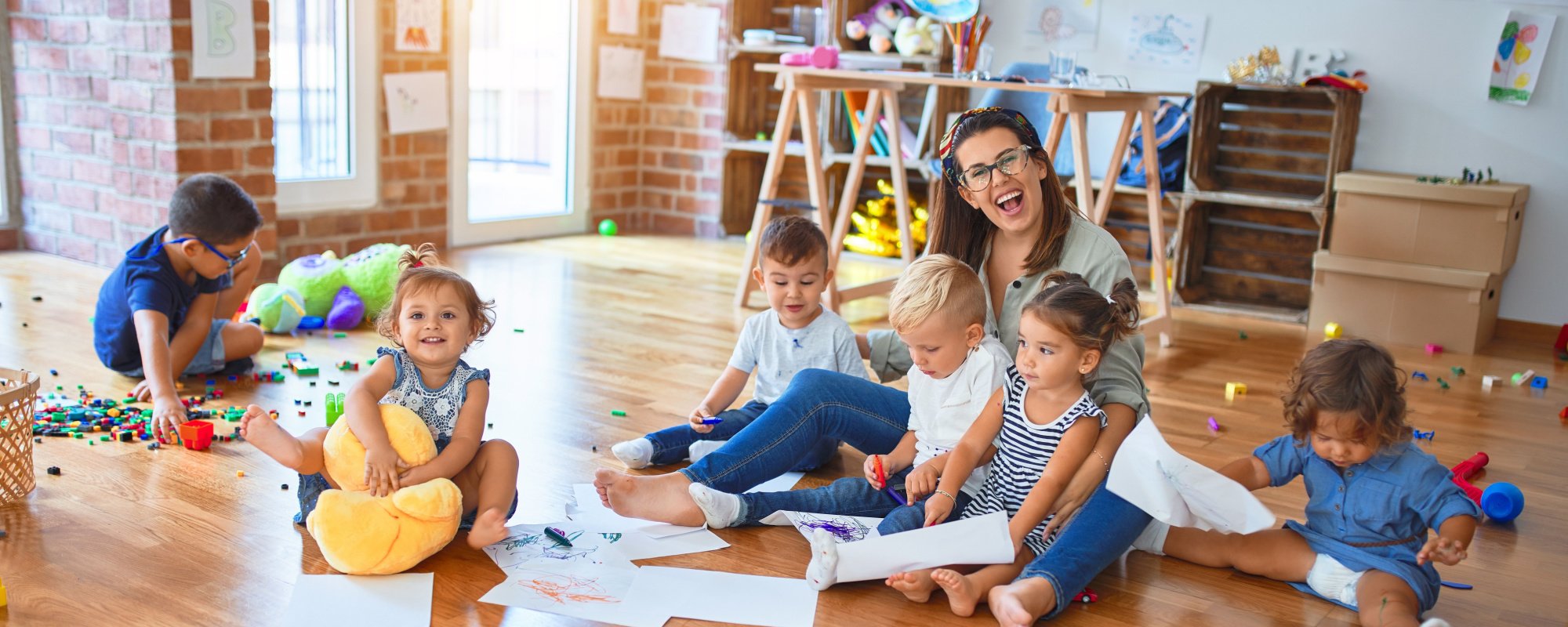
A Montessori classroom is peaceful and orderly. Materials are kept on low shelves so children can access them independently. The classroom is organized for multi-age groups, typically ages three to six. There is room for working together and working alone. The space is calm, allowing children to concentrate.
Natural materials, such as wood and cloth, are the learning tools. These materials assist children in waking up their senses and identifying variations in weight, texture, and color.
3. The Teacher
Montessori teachers serve as guides, not teachers. They observe to determine what each child requires, then intervene with assistance or a fresh lesson as necessary. One-on-one instruction is frequent. Strong teacher-student bonds are also present. This trust allows children to feel secure enough to take risks and experiment.
Continuous training is important because teachers need to discover new methods of allowing each child to develop.
4. The Curriculum
Montessori preschools span practical life, sensory, language, and math lessons. These zones allow kids to master practical skills, such as pouring water or tying their shoes, before completing language or math work. It is a three-year curriculum that shifts as each child develops. Kids are even exposed to science and culture, so they receive a wide perspective on the world.
Special Montessori materials, like sandpaper letters or counting beads, assist children in mastering each subject.
5. The Assessment
Montessori assessment is not based on grades or tests. Teachers use daily notes and careful observation to see how each child is doing. Progress is tracked against key milestones. Feedback is given calmly and respectfully, not as a score.
It involves parents and kids. This collaboration assists each of you in observing where a child is developing and what requires additional attention.
When Should Children Begin?
When to start a Montessori preschool is a decision that should ultimately be based on each child’s development and individual family requirements. Montessori education programs are designed to accompany a child from birth through their teenage years. The ideal age to begin a Montessori preschool is approximately 2.5 to 3 years of age. Getting an early start at this age aligns nicely with phases of rapid brain development, increasing social skills, and emerging independence.
Younger kids benefit greatly from Montessori’s tactile approach, which fosters their independence and enhances collaboration among Montessori students. Still, age is not the only thing to consider; readiness—such as wanting to do things independently, showing interest in other kids, and handling small routines—trumps a birthday. Of course, every child develops at their own pace, so parents are advised to observe these signs and pick a start time that’s appropriate for their child.
Infant & Toddler
Montessori infant programs, occasionally referred to as Nido, can range from birth to approximately 18 months. These Montessori environments are all about developing trust, creating secure attachments, and letting babies roam. Caregivers have a huge role by tuning in to signals and responding to each child’s needs with easy, loving gestures. For toddlers (16 months to 3 years), the Montessori classroom is structured to allow them to explore securely. Going with routines like putting on shoes or washing hands teaches them through everyday life. Parents lead and allow the kids to fight for themselves. If you focus on developmental steps—walking, talking, using utensils—adults can target activities to the child’s phase, helping learning feel organic and enjoyable.
Preschool Years
Transitioning from toddler to preschool, the emphasis is now on collaborating with others and engaging in groups within a Montessori classroom. Kids aged 3 to 6 are eager to give it a shot, mimic grown-ups, and play with others. This is a key stage for early childhood education, where the early acquisition of math, reading, and real-world skills takes place. Montessori lessons often employ basic tools and tangible items, such as pouring water and buttoning shirts, that allow children to learn by acting. The main focus here is fostering buds of independence, with kids spearheading small initiatives. Parents can assist by allowing kids time to dress themselves, help with meals, or clean their room, connecting learning at home and school.
Later Entry
A few children enter Montessori programs at later ages, like kindergarten or even first grade. The Montessori method remains adaptable, allowing instructors to tailor lessons to each student’s style and pace. In a Montessori classroom, mixed-age classrooms make it easier for new students to fit in, as the older kids can assist the younger ones while new kids inject fresh energy. These groupings help all kids in developing social skills, patience, and empathy. For families who start exploring Montessori education later, the program still nourishes development and presents distinct learning opportunities, even if the child misses the early years.
How Children Truly Develop
Montessori education considers the whole child—mind, body, and emotions, particularly in a Montessori classroom. It’s not simply about acquiring knowledge or abilities; it’s about cultivating confidence, social development, and the pleasure of exploration. Children thrive in Montessori environments when their innate motivation to learn is given the proper tools, freedom, and encouragement, especially during the early childhood years.
Cognitive Growth
Montessori education employs practical materials, such as counting beads or puzzles, that allow children to visualize and physically manipulate concepts in a Montessori classroom. These tools enable children to transition from surface-level tasks, such as shape sorting, to more complex reasoning, like summing or pattern matching. Each child learns at their own pace, which means they get the time they need to really grasp new material in their kindergarten year.
Problem-solving is an essential part of life in a Montessori environment. Kids may work out how to construct a tower that won’t fall or how to share supplies without bickering. This aids them in developing critical thinking skills and making wise decisions. Teachers provide freedom but impose boundaries, allowing children to explore with security and become bold.
Emotional Intelligence
In Montessori, children learn how to identify their emotions and self-soothe. Teachers exemplify respect and patience, demonstrating to children that it’s alright to be angry, but it is key to behave kindly. Kids learn to wait, listen,n and use words when they have a problem.
When kids assist one another, like teaching a buddy to water a plant, they begin to become sensitive to their peers’ emotions. Peer conflicts become opportunities to practice solving problems and appreciating others’ perspectives, not merely moments to be mended by adults.
Regular schedules and a tranquil environment provide kids with security. Small acts such as tidying up or saying hello make them feel invested in the community.
Social Skills
Montessori classrooms mix children of various ages. Younger kids observe older ones for direction, and older kids lead the young, a dynamic that fosters both confidence and self-respect. This collaboration is crucial for interpersonal development.
Young children do group projects such as preparing snacks or tending gardens, which helps them develop conversational skills, the habit of sharing, and taking turns. Easy things,s such as distributing napkins, make kids feel useful and included.
Community meetings or clean-up times get everyone working collectively. Respectful speech is taught and modeled, so everyone learns to listen, speak up, and care for one another.
Physical Dexterity
Daily activities, such as buttoning a shirt or pouring water, are incorporated into the class. These assist kids in building hands and bodies of steel as they acquire practical skills. Even toddlers, as young as 18 months, can get involved and learn.
Children manipulate tools such as tweezers, jumbo beads, or sweeping brooms, all of which develop both fine and gross motor skills. These are not playthings; they create a bridge between body and mind, preparing children for writing, reading, and thinking.
Unrushed motion — walking a line, bearing trays — fosters a sense of steadiness and agency in kids. Movement is interspersed throughout the day and is not reserved for play.
The Unseen Montessori Curriculum
The unseen Montessori curriculum operates below the surface, molding children’s brains long after they outgrow counting or words. In a Montessori classroom, social and emotional development is integrated with academics, allowing children to thrive in their early childhood education. Her curriculum was organized around sensitive periods, times when children were most receptive to developing new skills. At these ages, they soak up language and logic and even life skills more quickly than at any other age. Montessori education holds independence, respect, and sustained concentration in equal esteem to the traditional school curriculum. They are introduced to practical life skills every day, from buttoning shirts to caring for plants, which develops a strong sense of responsibility and self-worth. It’s an approach that is sequenced across three years, with the culminating Montessori kindergarten year viewed as crucial, not simply a capstone, because that’s when it all comes together.
Cultivating Focus
Montessori classrooms, known for their unique learning environment, feature long, uninterrupted work periods that often last two hours or more. This structure allows children to self-select activities and immerse themselves until they feel complete, fostering their passions and genuine concentration. For example, babies may engage in activities like sorting beads by color or pouring water, repeating these tasks until they master them. This self-directed approach encourages children to discover what excites them. Teachers introduce a single skill at a time, promoting independent work and pride in overcoming challenges, all within a quiet and neat classroom environment that minimizes distractions.
Fostering Grit
Montessori education presents kids with actual work, like tying shoelaces or sweeping, that can require multiple attempts to perfect. These daily tasks, integral to the Montessori classroom, instruct them in persistence and help them persevere with a difficult task. They’re asked to attempt, to fail, and to attempt once more. Errors are not punished but regarded as an integral part of learning in Montessori programs. Small goals, like pouring without spilling or writing a letter, and stopping to reflect on what worked, allow kids to see progress and cultivate grit. Teachers lurk nearby, providing assistance but not stepping in, so kids develop a growth mindset and discover that effort is more important than nailing something on the first try.
Normalizing Error
In a Montessori classroom, errors are not shameful; they are expected. This learning environment regards mistakes as opportunities for cognitive development, not causes for reproach. Children are taught to repair their own mistakes, such as spilled water, rather than being reprimanded. This protective atmosphere allows kids to dare, experiment, and not be afraid to fail. Teachers provide subtle, truthful feedback, directing students to observe what failed and how to improve the next attempt, cultivating an optimistic attitude toward struggle and viewing stumbling blocks as milestones toward mastery.
Beyond The Classroom Walls
Montessori education doesn’t stop at the classroom door; it extends into the homes and communities where young children live, learn, and socialize. This approach, rooted in exploring Montessori education, emphasizes that education is everywhere, and parents play a crucial role in nurturing their child's development beyond the traditional school environment.
Home Connection
It’s very important to have an open dialogue between parents and the Montessori teachers within a Montessori classroom. This communication provides both parties with a common frame of reference for the young child’s development and needs. When parents and teachers exchange updates and insights, they can support the child’s learning in Montessori programs with a unified front. This ongoing exchange might be as simple as a daily check-in or sharing notes on their child's fresh interests.
Families can introduce Montessori into the home with simple, actionable strategies. For example, parents can install low shelves so kids can access their own books and toys, fostering independence. Allowing kids to assist with regular chores, such as making snacks or watering flowers, not only encourages autonomy but also aligns with the principles of a Montessori daycare. These aren’t just chores; they’re lessons that educate in accountability and dealing with real-world issues.
Lifelong Learning
Montessori sowing the seeds for a lifetime of curiosity. When you allow children to wander and choose, you’re giving them the gift of discovering the pleasure of learning for its own sake. This spark knows no bounds of age or location. It persists as children mature.
Critical thinking and problem-solving lie at the core of Montessori philosophy. Hands-on activities challenge kids to experiment with ideas, inquire, and seek solutions. These are skills that enable kids to adjust and flourish in an ever-evolving world.
They develop a sense of confidence in their vision and a willingness to take risks. This constructs self-confidence and emotional equilibrium. Montessori methods can flex to suit each child’s age and style, so they’re useful at home, in school, or anywhere. Curiosity and self-motivation become habits, turning kids into learners for life.
Conclusion
Montessori preschools incorporate real objects and hands-on activities to engage children and allow them to learn at their own rate. Kids begin at age three, although some hold off. The emphasis remains on practical skills, such as pouring, shoe-tying, and shape-identification. Teachers direct, but children select what to learn. The method suits all kinds of kids, including the quiet and the boisterous, the timid and the confident. Children develop in little increments, not in great jumps. Families experience real transformations, such as kids who demonstrate respect or tidy up independently. To find the right fit, check out your local schools, talk to teachers, and observe a class. Contact a Montessori school nearby to find out how it works in action.
Frequently Asked Questions
1. What Is A Montessori Preschool?
A Montessori preschool, part of the broader Montessori education programs, fosters independence, respect, and curiosity in young children, guided by trained Montessori instructors.
2. At What Age Can Children Start Montessori Preschool?
Kids can generally begin Montessori preschool programs between 2.5 and 3 years of age, as every child is unique in terms of their cognitive development. It ultimately depends on their readiness and comfort in a Montessori classroom environment.
3. How Does Montessori Support Child Development?
Montessori encourages development by allowing children to select tasks that fit their interests and abilities, fostering confidence, problem-solving, and social skills in an authentic Montessori classroom environment.
4. How Do I Know If My Child Is Ready For Montessori Preschool?
Your little one could be ready for a Montessori preschool program if they display inquisitiveness, can adhere to elementary directions, and handle basic self-care. Readiness depends on their comfort level being part of a Montessori classroom and away from home.
5. What Is Unique About The Montessori Curriculum?
The Montessori classroom curriculum revolves around the young child, emphasizing practical life, sensory, and academic fundamentals at their own pace, promoting learning through experience.
6. Does Montessori Learning Happen Only In The Classroom?
No, Montessori education is about more than just the classroom environment. Even at home, families can draw on Montessori concepts, inspiring preschoolers to discover, get involved in everyday tasks, and learn through experience.
7. What Are The Benefits Of Montessori Preschool For Children?
Montessori preschool programs foster independence, confidence, and a love of learning in children, encouraging social development and self-discipline, which are aptitudes that set kids up to succeed later on in their kindergarten years.
Support Your Child’s Growth Through Montessori Philosophy And Early Learning
Curious how Montessori philosophy and early learning can shape your child’s development? We invite you to experience it firsthand at Fountainhead Montessori in Livermore. Our classrooms are carefully prepared to support curiosity, independence, and a genuine love of learning, giving young children the freedom to grow at their own pace in a calm, supportive environment. Optional before- and after-care is also available for families who need flexible schedules.
Click below to schedule a personal tour, download our free parent guide, or review our transparent tuition rates. If you’re wondering whether Montessori philosophy and early learning are the right path for your child, our admissions team would be happy to answer your questions and help you find the best fit for your family.






Let us know what you think about this post
Put your Comment Below: