

Early childhood is one of the most influential stages of human development, shaping the skills and habits that children will carry throughout their lives. During the toddler years, children experience remarkable growth in language, motor skills, emotional regulation, problem-solving, memory, and social awareness. Their brains develop at an incredible pace, forming millions of neural connections through everyday experiences, interactions, and play. Simple activities such as stacking blocks, listening to stories, singing songs, exploring nature, or learning to feed themselves all contribute to cognitive and physical development. Because children are naturally curious during this stage, providing an environment that encourages safe exploration and discovery is essential to helping them reach important developmental milestones.
The experiences toddlers have during these formative years lay the groundwork for future academic achievement, emotional well-being, and lifelong learning. High-quality toddler care provides opportunities for children to practice communication, build friendships, strengthen independence, and develop confidence in their abilities. Rather than simply supervising children throughout the day, quality programs intentionally create learning experiences that encourage curiosity, resilience, and creativity while s[[‘’upporting each child's unique developmental pace. When toddlers feel secure and supported, they are more willing to take healthy risks, solve problems, and engage with the world around them.
A well-designed toddler care program offers much more than a safe place for children while parents are at work. It provides a carefully prepared environment where structured routines, hands-on exploration, positive social interactions, and individualized guidance work together to support the whole child. Daily activities are designed to strengthen language development, improve fine and gross motor skills, foster emotional regulation, and encourage critical thinking through meaningful play. Caring educators observe each child's interests and developmental needs, providing encouragement and gentle guidance that helps children become confident, capable learners.
Programs inspired by the Montessori philosophy further enhance early development by recognizing that toddlers learn best through purposeful, self-directed experiences. Instead of relying solely on teacher-led instruction, Montessori classrooms encourage children to make choices, explore specially designed learning materials, and practice practical life skills that build independence and responsibility. Children are given the freedom to learn at their own pace within a structured environment, allowing them to develop concentration, self-discipline, and confidence while cultivating a genuine love of learning. For families searching for toddler care near them, choosing a nurturing program that supports every aspect of development can provide children with a strong foundation for preschool, elementary school, and future success.
Key Takeaways
- High-quality toddler care supports cognitive, language, physical, emotional, and social development during one of the most important stages of early childhood.
- The toddler years represent a period of rapid brain development, making positive learning experiences especially valuable for long-term growth.
- Structured daily routines help children develop confidence, independence, self-regulation, and a sense of security.
- Hands-on, play-based learning encourages curiosity, creativity, critical thinking, and age-appropriate problem-solving skills.
- Positive relationships with caring educators provide emotional support while fostering trust, resilience, and healthy self-esteem.
- Daily interactions with peers help toddlers develop communication skills, cooperation, empathy, patience, and conflict-resolution abilities.
- Safe, nurturing environments encourage children to explore, experiment, and discover new skills with confidence.
- Family partnerships and open communication between parents and educators create consistency that reinforces learning both at home and in the classroom.
- Montessori-inspired toddler programs promote independence, concentration, practical life skills, and self-motivated learning through child-centered experiences.
- Investing in quality toddler care helps prepare children for preschool while establishing a lifelong foundation for academic success, confidence, and a love of learning.
Why Early Development During The Toddler Years Matters
The first few years of life are a period of extraordinary brain development. During the toddler years, children's brains form millions of neural connections as they interact with people, explore new environments, and engage in everyday experiences. This rapid growth makes early childhood one of the most influential stages for developing the skills that support future learning, behavior, and overall well-being. Every conversation, story, game, and hands-on activity contributes to how children understand the world around them.
Research consistently shows that positive early experiences help strengthen cognitive abilities, emotional resilience, and social competence. Conversely, limited opportunities for exploration and interaction can affect a child's ability to build essential developmental skills. This is why choosing a high-quality toddler care program is so important. A supportive learning environment encourages children to ask questions, experiment, solve problems, and develop confidence through age-appropriate experiences guided by caring educators.
Key Areas Of Development During The Toddler Years
During this important stage, children begin developing:
- Language and communication skills
- Fine and gross motor coordination
- Emotional regulation
- Memory and attention span
- Problem-solving abilities
- Social confidence
- Independence and self-help skills
- Curiosity and creativity
Quality toddler care intentionally supports each of these developmental areas through engaging activities, structured routines, and positive interactions that encourage children to become active participants in their own learning journey.

How Safe And Nurturing Environments Encourage Growth
Toddlers are naturally curious and eager to explore, but they learn most effectively when they feel safe and emotionally supported. A welcoming, predictable classroom provides the security children need to investigate new ideas, interact with others, and develop independence without fear of failure. Caring educators create an atmosphere where children feel valued, respected, and encouraged to try new experiences while knowing support is always available when needed.
A nurturing environment also helps reduce stress and anxiety, allowing toddlers to focus on learning instead of uncertainty. Child-sized furniture, thoughtfully organized learning materials, consistent expectations, and warm teacher-child relationships all contribute to an environment where children feel comfortable taking healthy risks, asking questions, and discovering new abilities.
Emotional Security Builds Confidence
When caregivers consistently respond with patience, encouragement, and kindness, toddlers develop trust and emotional resilience. These positive relationships become the foundation for healthy emotional development and self-confidence.
Feeling emotionally secure helps children:
- Try new activities without fear
- Build confidence in their abilities
- Express emotions in healthy ways
- Develop independence
- Learn from mistakes
- Form positive relationships with peers and adults
- Become more willing to explore and solve problems
When children know they are supported, they are more likely to embrace challenges and develop the confidence needed for future learning.
Structured Daily Routines Help Toddlers Thrive
Young children thrive on consistency. Predictable daily schedules provide a sense of stability that helps toddlers understand what to expect throughout the day. This consistency reduces anxiety, supports emotional regulation, and allows children to focus more fully on learning and exploration.
Well-planned routines also teach responsibility and independence. As children become familiar with daily expectations, they begin completing simple tasks with less assistance, building confidence in their growing abilities.
Daily Routines Support Development
A balanced toddler schedule may include:
- Morning greetings and arrival routines
- Independent work or exploration time
- Circle time and group learning activities
- Outdoor play and physical movement
- Healthy meals and snacks
- Practical life activities
- Music, art, and sensory experiences
- Storytime and language development
- Rest or quiet time
- End-of-day reflection and dismissal
Knowing what comes next helps toddlers develop time awareness, patience, self-control, and smoother transitions between activities. These predictable routines also provide opportunities to practice social skills, independence, and responsibility throughout the day.
Hands-On Learning Supports Cognitive Development
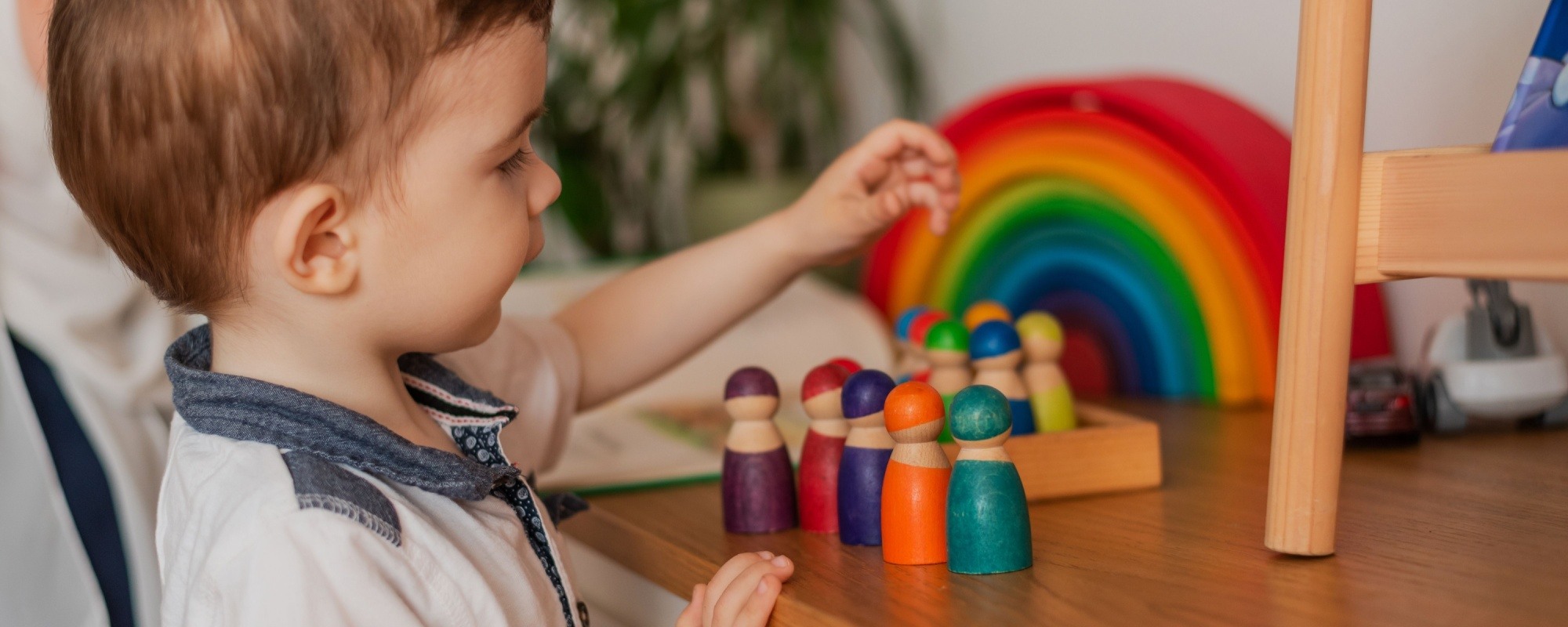
Toddlers are active learners who gain knowledge by doing rather than simply watching or listening. They naturally investigate their environment by touching, moving, sorting, building, and experimenting with materials. High-quality toddler care encourages this natural curiosity through carefully planned, hands-on learning experiences that make abstract concepts easier to understand.
Rather than focusing on memorization, educators provide opportunities for children to discover answers independently. This process strengthens confidence, concentration, and critical thinking while making learning enjoyable and meaningful.
Learning Through Exploration
Hands-on experiences help toddlers develop:
- Critical thinking
- Cause-and-effect understanding
- Memory retention
- Concentration
- Early math concepts
- Language and vocabulary
- Creativity and imagination
- Observation skills
- Confidence in problem-solving
Montessori-inspired classrooms place particular emphasis on self-directed learning by offering carefully prepared materials that encourage children to choose activities based on their interests and developmental readiness. This child-centered approach nurtures independence while allowing children to learn through purposeful exploration.
Social Interaction Builds Communication And Emotional Skills
Daily interactions with peers are an important part of toddler development. In a quality toddler care setting, children learn how to communicate, cooperate, solve problems, and develop meaningful relationships. These experiences help children understand their own emotions while learning to recognize and respect the feelings of others.
Teachers model positive communication and gently guide children through social situations, helping them develop the emotional intelligence needed for successful relationships both inside and outside the classroom.
Social Skills Developed In Toddler Care
Through everyday interactions, children gradually learn how to:
- Share toys and learning materials
- Take turns during activities
- Listen while others speak
- Express needs respectfully
- Follow simple group expectations
- Solve minor conflicts peacefully
- Practice empathy and kindness
- Build friendships
- Cooperate during group activities
These foundational social skills contribute to classroom readiness and provide children with valuable tools they will continue using throughout school and life.
Physical Activities Strengthen Motor Development
Physical movement plays a vital role in healthy toddler development. As children run, climb, balance, and manipulate objects, they strengthen muscles, improve coordination, and develop body awareness. Regular physical activity also supports cognitive development by enhancing concentration, spatial awareness, and overall brain function.
Quality toddler care programs balance active play with fine motor activities to ensure children develop the physical skills needed for everyday independence and future academic success.
Gross And Fine Motor Skill Development
Toddlers participate in activities such as:
- Running and jumping
- Climbing playground equipment
- Walking on balance paths
- Carrying child-sized objects
- Pouring water between containers
- Sorting and transferring materials
- Stacking blocks
- Completing simple puzzles
- Drawing, coloring, and painting
- Using child-sized utensils and tools
These experiences strengthen hand-eye coordination, muscle control, balance, and dexterity while preparing children for future skills such as writing, cutting with scissors, and participating in sports or other physical activities.
Family Partnerships Enhance A Child's Development
Children benefit most when families and educators work together toward common developmental goals. Strong partnerships between parents and teachers create consistency between home and school, helping toddlers feel secure while reinforcing positive learning experiences across different environments.
Regular communication also allows educators to better understand each child's interests, personality, and developmental progress, enabling them to provide individualized support that meets each child's unique needs.
Benefits Of Parent-Teacher Collaboration
Open communication helps families:
- Understand developmental milestones
- Monitor learning progress
- Reinforce classroom learning at home
- Address concerns early
- Celebrate achievements together
- Maintain consistent routines
- Support positive behavior
- Strengthen their child's confidence
When parents and educators share observations and work collaboratively, children receive consistent encouragement that promotes healthy development and lifelong learning.
How Montessori Toddler Care Encourages Lifelong Learning
Montessori education recognizes that toddlers are naturally motivated to learn through exploration, movement, and purposeful activity. Carefully prepared classrooms are designed to foster independence by providing child-sized materials that encourage children to make choices, solve problems, and complete meaningful tasks on their own. Rather than directing every aspect of learning, educators serve as thoughtful guides who observe each child's interests and gently introduce new challenges when appropriate.
This individualized approach allows children to progress at their own pace while developing concentration, responsibility, self-discipline, and intrinsic motivation. Because learning is driven by curiosity rather than external rewards, children develop a genuine enthusiasm for discovering new ideas and mastering new skills.
Skills Fostered Through Montessori Toddler Care
Children in Montessori toddler programs often develop:
- Independence
- Self-discipline
- Concentration
- Respect for themselves and others
- Practical life skills
- Curiosity and creativity
- Problem-solving abilities
- Confidence in learning
- Responsibility and perseverance
These qualities support immediate developmental milestones while establishing a strong foundation for future academic achievement, personal growth, and a lifelong love of learning. By encouraging children to become active, capable, and confident learners from an early age, Montessori toddler care helps prepare them not only for preschool but also for the many educational and life experiences that lie ahead.
Conclusion
Choosing quality toddler care is one of the most meaningful decisions families can make during their child's early years. While safety and supervision are essential, an exceptional toddler program goes far beyond meeting basic needs. It creates an enriching environment where every activity, interaction, and daily routine is thoughtfully designed to support healthy development across cognitive, social, emotional, physical, and language domains. Through nurturing relationships with caring educators, hands-on learning experiences, opportunities for exploration, and consistent encouragement, toddlers develop the confidence, independence, and curiosity that serve as the foundation for future learning and personal growth.
The toddler years are a period of extraordinary brain development, making positive early experiences especially valuable. During this stage, children learn how to communicate, solve problems, build friendships, regulate emotions, and become increasingly independent. A high-quality learning environment encourages children to ask questions, make discoveries, and develop a love of learning while feeling safe, respected, and supported. Structured routines, engaging educational activities, and meaningful social interactions all work together to help children reach important developmental milestones at their own pace.
Families also play an essential role in a child's success. Strong partnerships between parents and educators create consistency between home and school, allowing children to benefit from shared goals, open communication, and collaborative support. When families are actively involved in their child's learning journey, toddlers gain additional confidence and stability that reinforce the skills they develop in the classroom.
For families searching for toddler care near them, Fountainhead Montessori School of Danville provides a nurturing Montessori environment where children are encouraged to explore, discover, and grow with confidence. Through individualized guidance, carefully prepared classrooms, and a commitment to supporting the whole child, the school helps toddlers build independence, develop essential life skills, and cultivate a lifelong love of learning. By investing in quality early childhood education today, families can give their children a strong foundation for preschool, future academic success, and lifelong personal development.
Frequently Asked Questions
1. What Age Is Appropriate For Toddler Care?
Most toddler care programs welcome children between approximately 18 months and 3 years of age, although enrollment requirements may vary by school. Some programs may accept younger toddlers once they demonstrate developmental readiness, while others have specific age ranges based on classroom structure. Parents should review each program's admission guidelines and consider whether the environment aligns with their child's individual developmental needs.
2. How Does Toddler Care Support Language Development?
Toddlers develop language skills through constant interaction with caring adults and peers. Teachers encourage communication by reading books aloud, singing songs, engaging children in conversations, introducing new vocabulary, and asking open-ended questions throughout the day. Storytelling, group discussions, and hands-on activities also help children build listening comprehension, expand their vocabulary, and gain confidence expressing their thoughts and emotions.
3. Why Are Routines Important In Toddler Care?
Predictable routines provide toddlers with a sense of security and help them understand what to expect throughout the day. Consistent schedules reduce anxiety, support emotional regulation, and make transitions between activities smoother. Daily routines also encourage independence by allowing children to practice self-help skills such as cleaning up, washing hands, eating independently, and following classroom expectations with increasing confidence.
4. What Makes Montessori Toddler Care Different?
Montessori toddler care emphasizes child-centered learning rather than teacher-directed instruction. Children are encouraged to choose purposeful activities, explore specially designed learning materials, and develop practical life skills at their own pace. Educators serve as guides who carefully observe each child's interests and developmental progress, providing individualized support while encouraging independence, concentration, responsibility, and self-confidence. This approach helps foster intrinsic motivation and a lifelong love of learning.
5. How Does Toddler Care Prepare Children For Preschool?
Quality toddler care builds the foundational skills children need for a successful transition to preschool. Through daily activities and guided learning experiences, toddlers develop communication abilities, early literacy and math concepts, social skills, emotional regulation, independence, attention span, and problem-solving abilities. They also become familiar with classroom routines, following directions, participating in group activities, and working both independently and collaboratively with others.
6. How Can Parents Support Their Toddler's Development At Home?
Parents can reinforce their toddler's development by creating consistent daily routines, reading together every day, encouraging conversation, and providing opportunities for independent play and exploration. Simple activities such as cooking together, sorting household objects, drawing, building with blocks, and spending time outdoors all promote learning through everyday experiences. Maintaining open communication with teachers and reinforcing classroom lessons at home also helps create a consistent learning environment that supports continued growth and development.
Find Trusted Toddler Care Near You In Danville
Finding the right toddler care is one of the most important decisions you'll make as a parent. At Fountainhead Montessori, our Danville campus provides a warm, nurturing environment where toddlers build confidence, independence, and a love of learning through hands-on exploration and individualized guidance. Designed for children as young as 18 months, our program supports each child's unique pace of development while giving families peace of mind. We also offer convenient before and after care to fit busy schedules.
Ready to see why so many local families choose Fountainhead Montessori when searching for toddler care near me in Danville? Schedule a personal tour, download our free parent guide, or explore our transparent tuition information. Our admissions team is happy to answer your questions and help you find the right fit for your child.






Let us know what you think about this post
Put your Comment Below: